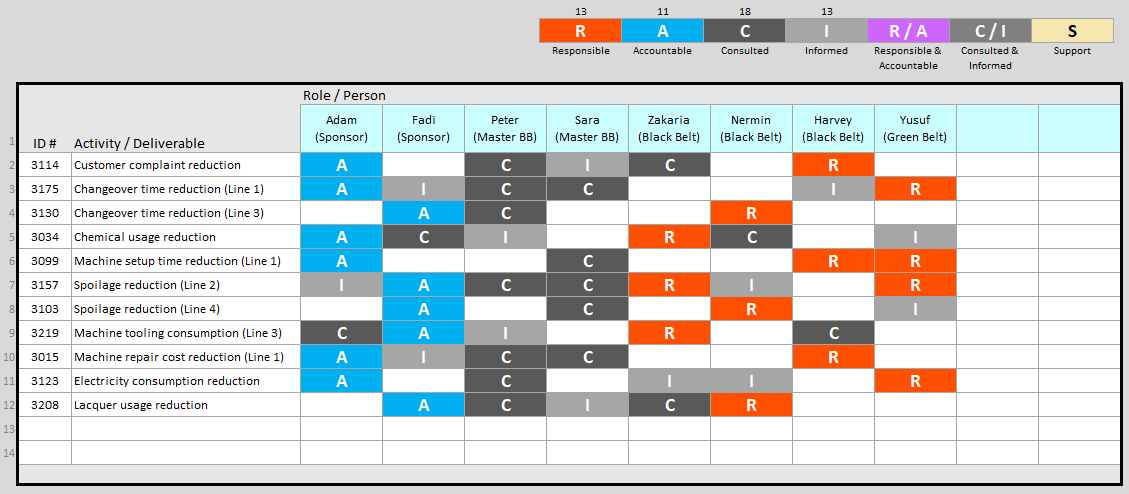
This RACI matrix was created to help assign Six Sigma belts to implement improvement projects. It allows everyone involved to clearly understand their roles, ensuring smooth collaboration and successful project completion.
This improvement roadmap example outlines the goals to be implemented as part of the long-term improvement journey for a manufacturing company, organized into three key goal categories.
This process chart example illustrates the steps in the animal feed production process, such as grinding, mixing, and packaging. It highlights opportunities to reduce waste by identifying high non-value-added times and tracks key metrics such as value-added time and distance traveled.
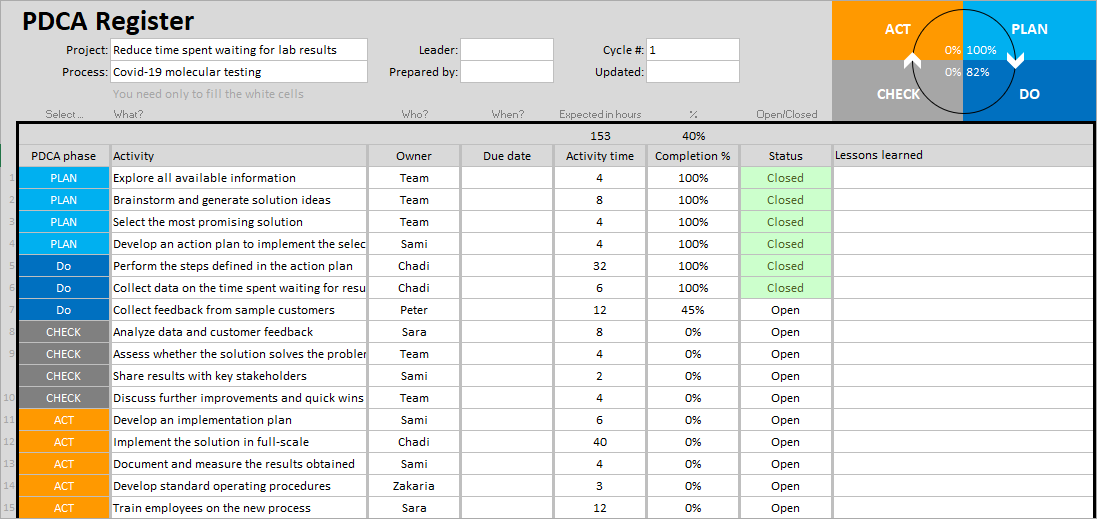
This example illustrates the use of the PDCA template to reduce molecular testing lab result wait times. This structured approach helped the team monitor progress, learn from each activity, and drive continuous improvement in the testing process.
This example shows how to use the Force Field Analysis template to assess whether a company should implement a content management solution. In this case, the total score of the helping forces is higher than that of the hindering forces which indicates stronger support for moving forward with the implementation.
This is an illustrative example of using the skills matrix template. Note the Threshold value at the bottom of the matrix. This parameter helps indicate which training programs are needed by highlighting those most required in yellow.
This is an example of using the questionnaire analysis template to analyze responses from a faculty satisfaction survey, distributed to 36 faculty members at a university, with 22 questions answered by each respondent.
This example shows how to use the audit checklist template in a production facility by auditing key areas such as cleaning, inspection, lubrication, visual management, and other relevant items. This can be evaluated using either a checklist or a rating method to identify compliance gaps and improvement opportunities.
This example illustrates a Modified Trousers best practice, where maintainers use specially designed trousers to keep essential tools with them and avoid carrying heavy toolboxes.
This example demonstrates the Modified Trousers best practice in which maintainers use specially designed trousers to keep essential tools on hand, providing an opportunity for other teams such as setup and changeover teams to replicate the practice.
This example uses a Gap Analysis Register to capture customer-identified problems, document the current and future states, and outline the actions needed to close them in a manufacturing environment.
This example uses a Gap Analysis Register to list all process gaps and their related information within a manufacturing environment. It also provides a dedicated area for suggesting actions to bridge those gaps.
This example uses a waste recording and tracking template to capture all Lean-related wastes in a food production environment. It includes a chart that summarizes the distribution of the eight wastes for quick visual analysis.
This example demonstrates how a waste recording and tracking template can be used to log Lean-related wastes using the TIMWOODS framework in a food production environment while showing the status of each waste item.
This example demonstrates how to use the 5W1H Problem Definition template to further analyze the issue of the labeling machine frequently stopping during peak production, which causes delays in the packaging process within a production environment.